
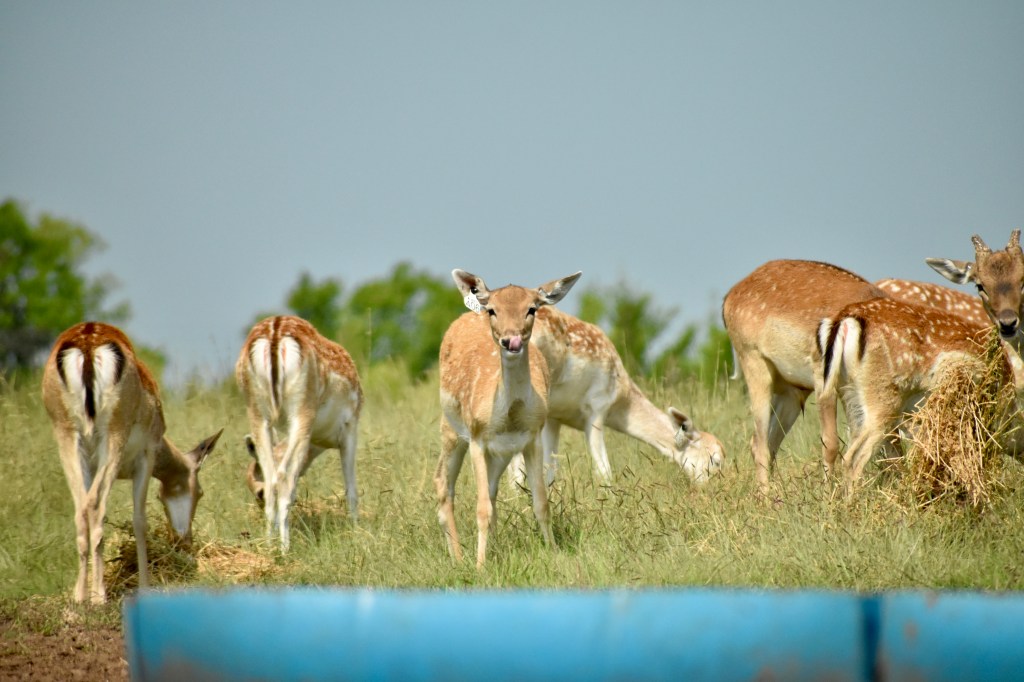
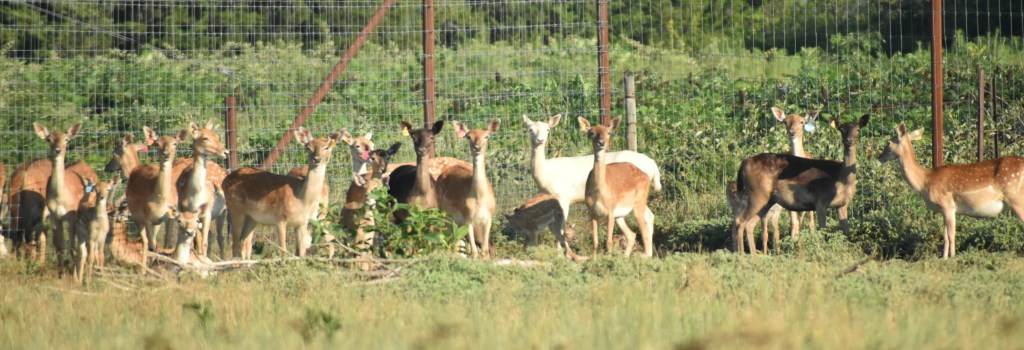
Raising livestock is a gamble. I have heard this phrase countless times since we got married and bought cattle (remember, instead of going on a honeymoon). But it’s the truth. There is no guarantee with animals. They get hurt. They get sick. They die. Most times it’s no fault of the farmer, BUT it still happens. So why gamble on a deer farm? Because our animals are amazing, that’s why. The better question is; how do we hedge our bets and minimize the fallout? How do we increase the likelihood of a positive outcome in a dire situation? YES tell me how …. I would love to learn all the ways, but I can also share a couple of the things we have learned so far.
Who’s in charge of medical emergencies on a deer farm? Who is going to swoop in and take care of things when the cards are stacked against you? Well… that would be us. Yep! Just us. We have already muddled our way through several medical issues with our fallow deer. We do have a couple of veterinarians that we work closely with, but most of them are three-plus hours away from where we live. Ultimately, it’s all on us as the operators of our deer farm. We are the first responders, the caretakers and the decision makers. I am beginning to think I should go back to school for a degree in animal health and nutrition.
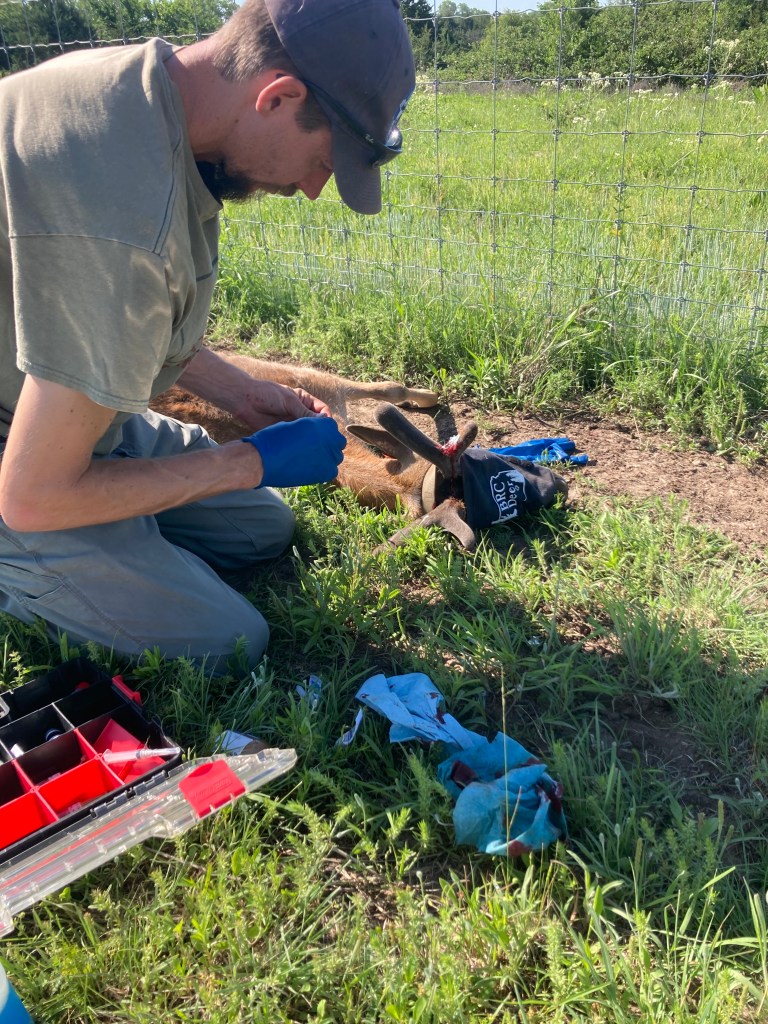
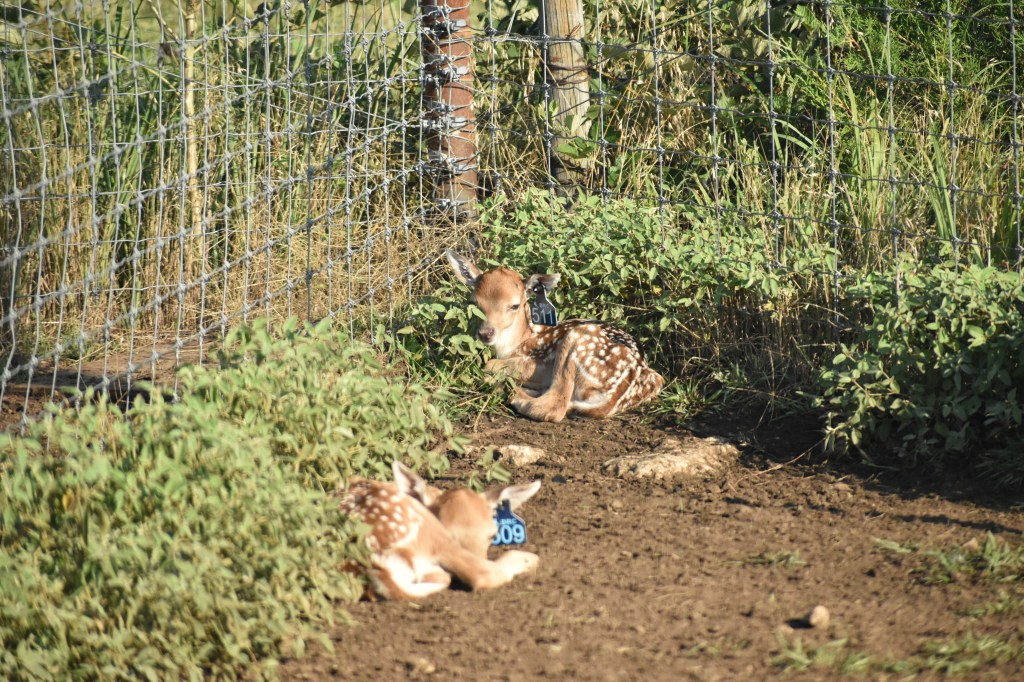
The only way to beat the odds is to be diligent and disciplined. It’s important to always keep an eye on our livestock. We are in our pens daily, closely observing our animals. We know who comes up to beg for snacks and who hangs out in the back. This makes it easy to spot if something is off. This summer we had two one-month-old fawns present with hernias, at the same time. Even though they are pasture fawns and didn’t come up close, we were able to spot the bulge on their bellies as something out of the ordinary. Thankfully they were quickly and easily captured in the barn for a closer look. Yep! This one required a call to our local vet as a hernia repair is outside of our wheelhouse. You gotta know when to hold ‘em and know when to fold ‘em.
Thinking and planning ahead will never be an ace in the hole, but it can sure help you stack the deck in your favor. Each and every time we do anything with our deer, Brendan takes the time to thoroughly lay out our plans. We then discuss the known stress points and assess other potential complications that could occur. This attitude comes from his day job of test flying airplanes; it’s not the normal that will get you, it’s the abnormal. And being able to identify the hazards ahead of time is how we best mitigate the risks brought on by the abnormal. This includes watching the weather every day, not just on deer working days. This past summer was a stormy wet season for us. And of course, in the middle of AI fawns dropping we had a weather alert at 4am for 100+mph winds. Did we gamble and hope the storm would miss our farm? You bet your booty that we were out in the pens collecting the fawns (fawns that were hours old) and depositing them safely into the barn. When the cards are on the table, I want to know that we did all that we could for our herd, rather than sit back and later wished we would have done more. Every deer farm has a story about a deer hitting the fence. That is just a reality of raising livestock on a high fence farm. Fallow deer, as with many of the other exotics, are wild animals. They are not used to being handled or worked through a facility on a regular basis. We know the risks and try our best to reduce the likelihood of an accident. Some of our modifications include: hanging shade cloth, giving them clear open alleyways ahead, working smaller groups and staying as calm as possible. Even with all of our efforts there can still be accidents. On weaning day this season, our 3rd to last deer left the barn and circled back around our catch pen to try and return to the holding pen that she came from. Unfortunately, that gate was closed and she hit it head on at a high speed. Over the next nine days we did our best to help her recover, but unfortunately, she succumbed to her injuries. While my head knows this is part of raising livestock, my heart hurts. Losing a member of our herd like this was not easy.
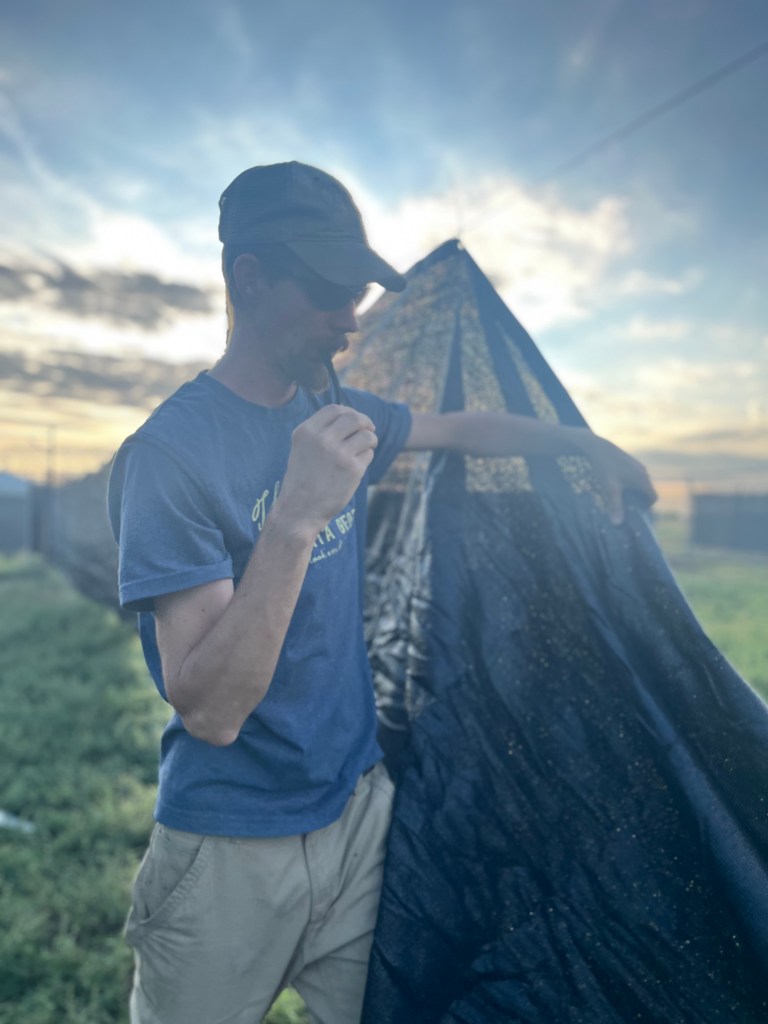
We love spending time in the deer pens and while it is enjoyable, it also serves a purpose. We are diligent with maintaining a safe environment. We are constantly on the lookout for risks and ways to mitigate them, such as:
- Picking up trash
- Ensuring the electric fence is HOT to keep predators out
- Filling in spots that look like something was trying to dig under the fence
- Locating all the used tranquilizer darts
- Shutting down the farm from visitors during the first trimester
- Installing cameras to keep an eye on the pens
- Maintaining perimeter fences and condition of gates.
Honestly just anything that could cause a problem. If we can find it first, then the likelihood of a major problem is reduced drastically.
No one knows it all from the get-go. It’s a learn-as-you-go process with high stakes. Thankfully we have many folks in the deer and exotic farming industry we can call and ask questions, many times in the heat of the moment. We do not take this for granted. And we try to be the same available resource when our own phones ring. We also know the importance of soaking up all the information we can from the resources available. We love reading magazine articles especially from the EWA magazine, the North American Deer Farmer magazine, and our Tri-State associations magazine. Attending conferences has become a priority for us. The relationships formed and the information we have learned from talking to other deer farmers, has been irreplaceable. We are also constantly monitoring deer farming facebook groups and soaking up the suggestions they share on issues they are facing. There is always a chance that something happening on another farm might find its way to our very own. Following along with someone else’s actions is a small step we can take toward being prepared for the future. These are some of the cheapest lessons we could ever learn, and we are thankful that the industry is always willing to help others by sharing their experiences.
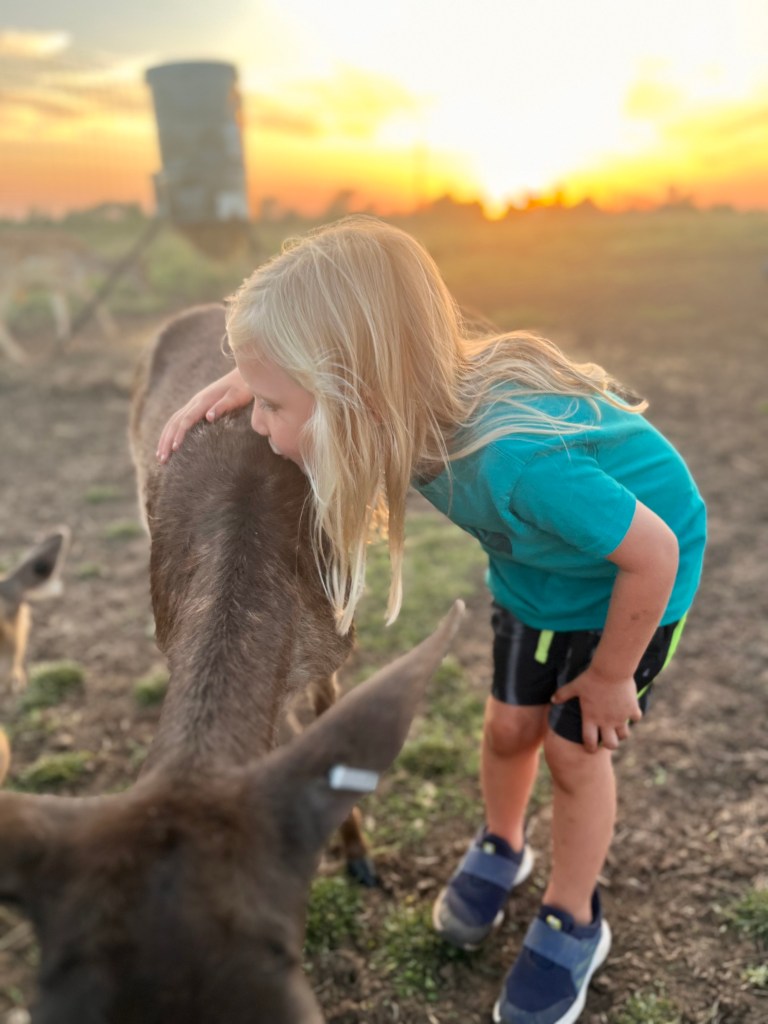

Raising deer will never be a sure bet, but that’s what makes it worth playing. Every challenge sharpens our skills; every setback teaches us something new. The odds may shift, but our commitment to these animals never does. What we do have is the resolve to keep playing, to keep protecting, and to keep pushing forward no matter how the deck is stacked. In this game, perseverance is the only ace in our deck.
~The Deer Wife
Becky Compton
BRC Fallow Deer

 BRC Fallow Deer
Leave a comment